Best Smart Blinds Compatible with Alexa & Google Home in UAE
The demand for smart home automation in the UAE is rising for energy efficiency, security, and a luxurious lifestyle. Smart blinds add comfort, convenience, and a stylish look to your…

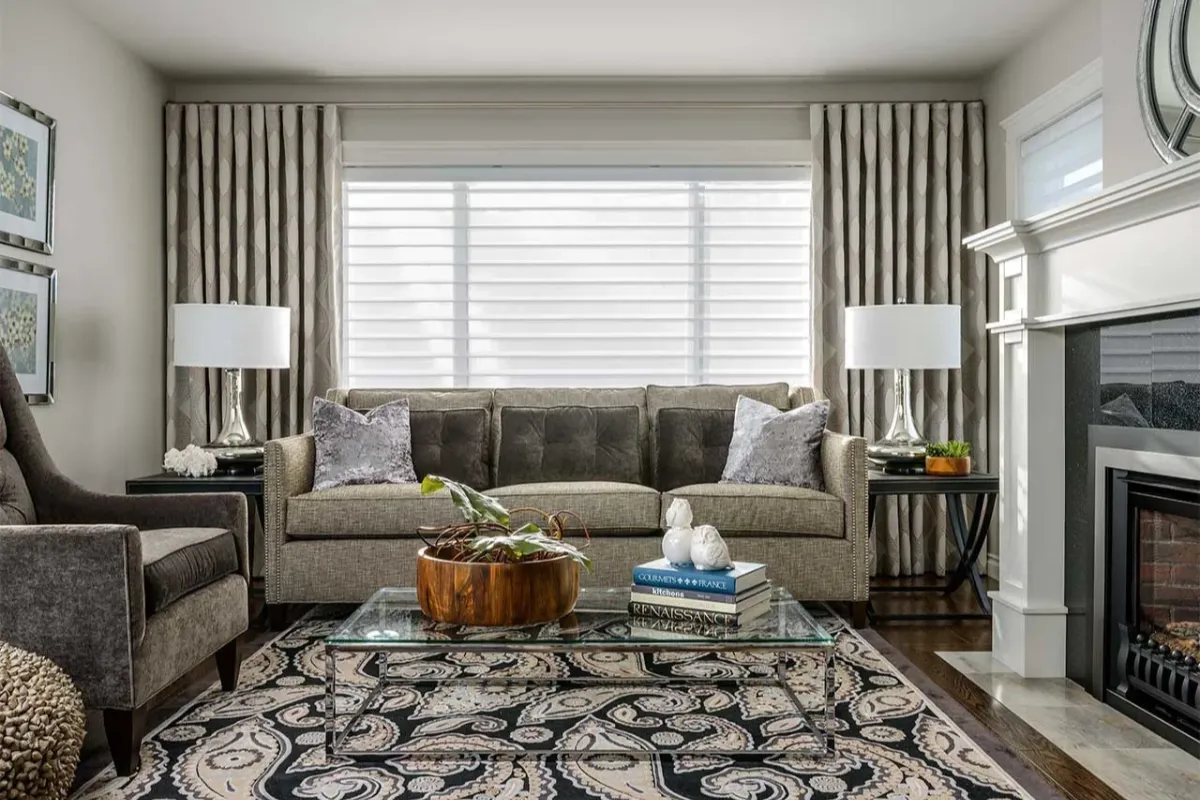
For visually appealing and functional curtains, it is essential to choose the right size. Perfectly fit window curtains not only enhance the look of your room but also improve its performance. Additionally, they create a cohesive look that seamlessly blends with your space’s decor. Your curtain width and length will decide the final look & feel of your space. With perfect-fit curtains, you will get maximum light control, privacy, insulation, and noise reduction tailored to your room’s needs.
To clarify your query about what size curtains I need, we have represented this blog post with a step-by-step guide. This will help you measure the right length, width, and fullness ratio for standard to exceptional window curtains.

To determine the right size of your window, you must know the right way to measure its dimensions. Have a look at the steps below for accurate measurement of your window width and length for perfect sheer curtains.
Measure the width of the window frame using the right tool, which is a measuring tape. Hold one end of the tape and start measuring the window horizontally. Start from the outer end of one side of the window frame to the outer end of the other side. See the figure on the tape, and this is your window width.
After measuring the window width, the next step is to calculate the window height or the length from the curtain rod to the floor or to the length you need to achieve. Floor length is the vertical dimension of your drapes that barely touches the ground. Sill length means the curtain length that ends at the lower end of the window. Whereas the puddle means your curtains are longer than the floor limit, and they rest on the floor for a stylish impact.

Follow the expert tips while measuring the window’s width and length for the right curtain styles.
You can calculate the width of your bedroom curtains from the window width you have measured. The final drape width should be wider than your window width. Read the description below for a better understanding.
As a general rule, your window cover width should be 1.5 to 3 times the window width. This extra measurement will provide full window coverage, filling the gaps on either side, and give space to curtain folds to set smoothly & deeply for an elegant look. If your window width is about 60 inches, then add 6-12 inches for gap filling. Your final curtain width will be 72 x 1.5 = 108 inches, 72 x 2 = 144 inches, or 72 x 3 = 216 inches, depending on the required fullness.

The drapes’ width will directly affect the fullness and gathering. The wider the width, the higher the fullness and the gathering. Fullness is the ratio of your curtain width to the window frame. While gathering is the way to reduce the curtain width after stitching or to achieve the final look of your drapes after making the fold or pleats. You can adjust the drapes’ width to achieve the following fullness and gathering.
When calculating the final window curtain width, the panel selection matters. For a single panel, the final width will be equal to your measured curtain width. For multiple panels, divide the total drape width by the total number of panels to get the width of each panel. For example, if your drape is 120 inches wide, then the panel will be of the same width. But for 2 panels, it will be 120/2=60 inches for each panel.
Once you have evaluated how wide your curtains will be, the next step is to assess your curtain length. For a better idea, go through the following description.
The placement of curtain rods will affect the length you want to achieve. The general rule is to place the rod high and wide on your window. If the rod is close to the window’s upper edge, the hung curtains will appear smaller, creating an incomplete room aesthetic.
Similarly, if the rods are higher above the upper window, the drapes will hang nicely with an elongated effect. They will create an imaginary vertical impact, making your room ceiling look higher with longer drapes. Keeping them close to the ceiling in larger rooms will give them a taller and broader effect.
Hence, for a polished, balanced look in your space, follow the tips below when determining the best length for drapes.

When choosing drapes, give careful attention to the desired style and fabric to achieve the aesthetics you want while meeting your space needs.
The fabric selection for your drapes affects light control, privacy, energy efficiency, and the overall mood and style of your space. Sheer curtains are made from the lightweight fabric, while blackout curtains are made from heavy fabric. Voile, lace, chiffon, or net are lightweight fabrics that diffuse light and provide some privacy. Linen and velvet are blackout fabric options that block light completely, providing 100% darkness and the highest level of privacy.
If you want an energy-efficient drape with more light control and sound-dampening properties, opt for a heavy fabric like brocade, velvet, or linen. They give a fine look with a good level of privacy. For an airy and soft look, consider choosing lightweight fabrics. They are easy to hang on every style rod and are easily adjustable to different heights.
The header style of your drapes will affect the curtain width and length choices. We need to decide on the extra width for fullness and the right curtain drop. The common heading styles include tab-tops, rod pocket, grommet, or eyelet curtains. They create a sleek look and need less fullness than the pleated curtains. The heading also affects the length to which you need to hang your drapes.
For grommet & eyelet curtains, the curtain drop is measured from the upper end of the rod to the floor. Whereas for pleated window curtains, the measurement starts from the hook to the floor. As the pleats are pinched, they make neat folds that reach the floor. With this style, you can hang drapes at floor length to make the room’s ceiling taller. Tab top and rod pocket look good in sill-length or apron-length for a casual look..
For special or complex windows, you need to pay closer attention when measuring the width and length. This will help you get the perfect fit drapes for a harmonious effect.
As you know, bay windows consist of three or more panels that extend outward. To take dimensions, measure each window separately. Start at one end of the window frame and work to the other, including any trims. You can place one single rod for the entire window or a separate panel for each window. For right-sizing, follow the exact instructions for width and length as we have discussed for the regular standard windows.
To determine the right size for sliding door curtains, measure the sliding doors. Start by measuring the doorframe from one side to the other, including any protruding handles or locks. For length, measure the door frame from top to desired sill, apron, full, or puddle length. Make sure the curtains are wide and easy to open.
For arched, irregular, or angled windows, measure the window from three different points. Measure the length from the uppermost point of the window to the desired length. For width, measure the rod width that is fixed on the window. You can use a single rod for these windows and get a customized rod that complements the window shape.
When layering sheer with heavy blackout curtains, the essential thing is to hang them on double rods/tracks. After measuring the window, adjust the width of both curtains for fullness. As sheer curtains are light in weight, they require more fullness than heavy curtains. For lengths, make sure the sheer window curtains are slightly longer than the floor for a luxury look. In comparison, it would be good if the blackout drapes touch the ground or just above the floor for a sophisticated look.

When measuring windows for the right-sized curtains, follow the tips below.
The right size for your drapes will enhance the aesthetics and functionality of the space. Choosing the correct curtain size is essential to ensure full window coverage for light control and privacy. Your curtains, with the proper width and length, enhance the room’s perception and style through their fullness, length, and fabric. If you want a perfect look with complete and balanced decor, you must select the right drapery. At the end, we would like to say follow this guide for a perfect fit and style for the curtains.