Best Smart Blinds Compatible with Alexa & Google Home in UAE
The demand for smart home automation in the UAE is rising for energy efficiency, security, and a luxurious lifestyle. Smart blinds add comfort, convenience, and a stylish look to your…

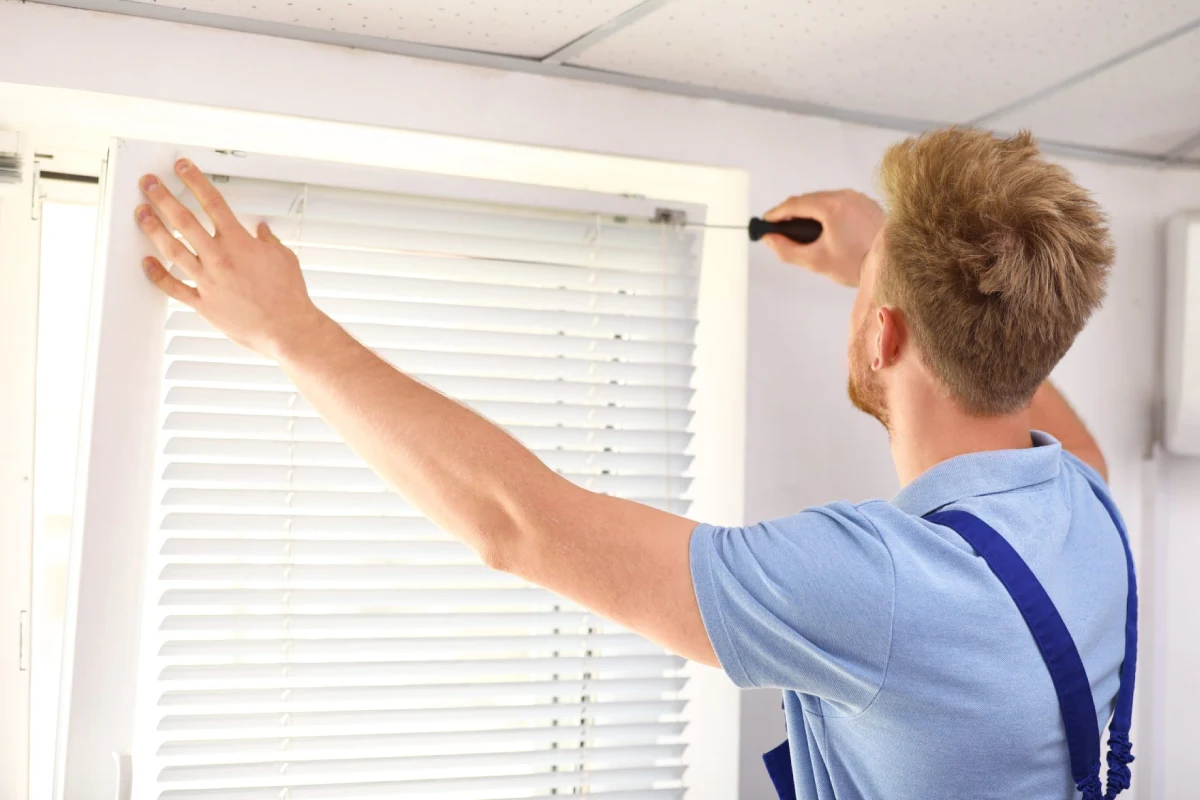
Precise blind installation is important for them to look and function properly. When blinds are perfectly fitted, they provide optimal control over light entering the room and maintain privacy for a comfortable environment. In hot climate & busy areas, these blinds provide insulation and seclusion.
Correct installation is necessary for safety and elegance. Proper fitting reduces the chances of falling and entangling cords with the provision of proper insulation and energy efficiency. If you have bought new blinds for your space and are looking forward to learning how to install blinds accurately, stay with us. We are going to discuss the steps you need to know for fixing different types of window shades.

Not all Blinds in Dubai have the same operating mechanism; some are installed on brackets (corded or cordless). Some need no drilling to install them. The installation methods depend on the type of blind, its mechanism, and the mounting type (inside or outside). Before we discuss the methods for fixing, let’s get an overview of common blind types.
Usually, a large roll of fabric is used that rolls up to let in light and down when you need to block it. These are installed either inside mount or outside mount, using specialised brackets with rolling-spring features. You can also fix them on the tension or magnetic rods without drilling.
With horizontal wood, aluminum, or faux wood slats, these blinds need a box bracket to fix the string headrail. Valance clips are used to hide the headrail, and a wand is required to operate the slats according to your needs.
In this type of window shade, the vertical slats are hung on the top track. These are usually mounted outside the window or sliding door, using a specialised track system.
To operate these blinds, a chain or cord system is used to hold the uniform folds up or down. They can be fixed on the inside of the window for a sleek look or on the outside of the window recess for a luxurious look. Like roller shades, these need to be attached to the brackets.
As you know, the wooden blinds are heavy, so they require sturdy brackets to hold the headrail safely. They usually need a central support bracket to avoid breakage.

Installing Roller Blinds would be an easy process if you have all the necessary tools and equipment in hand. For your convenience, we have prepared a list of essential tools and safety equipment.
Using the right tools for fitting blinds ensures proper alignment and precise installation without damaging the wall or the blinds. Using the wrong tools can lead to poor installation, leaving gaps or bending blinds.

When you fix the blinds outside the window casing, it means your Roman Blinds are outside-mount. They not only give your windows a stylish appearance but also make them look larger. This type of mounting covers the entire window, leaving no gaps. It also covers the window frame fully, so you will observe no sun damage. With these, all imperfections will hide.
Installing blinds inside the window casing means your blinds are inside the mount. These are space-saving and look modern because of their compact design. You need to measure the windows precisely to ensure perfection. Even a millimetre of error can make a huge difference. Mostly used in places with less space to make them look bigger.
For choosing the right installation method, look at your available space, blind type, and the functionality of your blinds. If your windows are deep and have enough space, then you can select the inside mounting. Whereas for large windows and sliding glass doors, an outside mount is mostly preferred by households.

If you are going to install the blinds inside the window casing, then follow these step-by-step instructions.
For inside mounting, focus only on the inside of the window, including depth and the frames/trims. The first step in installing blinds inside the window frame is to evaluate and mark the positions for the brackets.
To mark the position, you need to measure the window recess at the top left corner. Keep the distance of the bracket 10cm to the right of the left corner for easy operations. It varies from blind to blind, and the clearance is mentioned in the manual. So read the manual before you start measuring the windows.
If the window reveal/depth is 10 cm, then you mark the position of the brackets 5cm away from the outer edge of the window recess. Use a pencil for marking the screw position on brackets. Repeat the process for the second bracket on the right side of the recessed ceiling. Use a level from the first bracket to the right side of the window recess. Using a measuring tape, mark the position of the securing bracket halfway through the window with a pencil.
Once you have marked the bracket positions, make the drill holes using drill power. To do this accurately, take the drill bit that is slightly smaller than the screws you are using. Power on the drill and make the holes in the right bracket position you have marked earlier. Avoid making too many deep holes. The hole should be the length of the screws you have selected.
After drilling holes, insert the wall plugs using a drill driver/screw driver to ensure a secure grip of the screws. By the same procedure, make the holes for the second bracket.
After the holes are ready, fix the 2nd bracket with screws into the wall plugs. Use the level again to make sure the brackets are mounted properly in the right place. Now your basic requirement is done for the installation of blinds within the window reveal.
After both sets of brackets are fixed, the next task is to attach the headrail of the window shades to these brackets. First, attach one side of the headrail to the brackets, and then, on the other side, bind the top edge to the brackets’ outer edge.
When all the steps are done, test your fitted blinds. It is necessary to check whether the blinds are at level and operate easily. Open or close the slats using the chains to ensure there is no hindrance. The blinds are performing efficiently. At this point, you can make some adjustments if needed.
Avoid common mistakes for the smooth fitting and functional output. Ignoring window depth and using an improper level will result in poor performance. Do not make mistakes while measuring windows from three different locations. Incorrect rounding off the measurement will give the proper size.

For those who want to learn how to install window blinds outside of the recess, we have explained every step in detail. Go through these step-by-step instructions for perfect installation, ensuring proper coverage and light control.
Take a measuring tape and measure the window’s height and width. These measurements will help calculate the blinds’ right dimensions. While measuring, cover the entire window, including the upper casing and trim. Also, sides about 10 cm wide are added to prevent light leakage.
For accurate measurement, hold the tape at the top of the window with a suitable clearance (10-15 cm). Then, place a bracket mark at that spot for screws with a pencil.
When you have marked the positions for both sides of the brackets, install the brackets by inserting screws into the predrilled holes. Use plugs for a secure fixation. Tighten the screws using screwdrivers into the plugs.
At the end, attach the headrail of blinds to the brackets. Before mounting the blinds, check the level again. It must be aligned for the proper hanging of blinds. For the entire process, you need to be careful about the right placement.

Not every window blind is similar in its fitting mechanism, which is why you must get an awareness of their basic requirements. To solve the queries about how to hang blinds, we have discussed the variations in methods of installing different types of blinds.
For roller blinds, locate the right bracket placement and then fix the brackets. Then cover the brackets with bracket cover and insert the right roller tube into the brackets. First, attach it to one side of the bracket, then to the other. This is necessary for the alignment of the chain mechanism for easy operations.
If you are looking for the right method to install the venetian blinds, then the headrail installation is a crucial step. After securing the brackets, attach the headrail of the blinds to one side of the bracket. Repeat the process for the other side. Make sure the horizontal slats are parallel to the window and aligned.
After the bracket fitting, attach the track or head rail to these brackets. Now hang the vertical slats on this rail. Do not forget to check the blinds after installation for smooth working.
To install Roman blinds, follow the same procedure as for venetian blinds. After mounting the headrail on the track, adjust folds and cords for efficient performance.

All the above methods are fit for the standard, square-shaped windows. If you have different, irregular, or bay windows, then there will be slight variations.

If your blinds are operating with cords or chains, then these should be securely fitted without creating danger for the users. For the security and safety reasons of kids and pets, you must use the cord cleats or tension devices.
This will reduce the entangling hazards. Choosing cordless blinds will be the right option for areas with high activity. If blinds are used often, then securely fitting blinds will reduce the chances of pet scratches, bites, or electrical shock.
After the installation is done, there is something wrong with their working efficiency. Then you must seek help from the experts. The most common problems people face after DIYing their blind installation are the following.

For simple projects, DIY installation works best and can be a cost-effective investment. It can save some money, but lacks a professional finish. It takes more time because of using simple tools.
For large & complex projects, or for windows with arched or irregular shapes, expert installation is required. Experts fix the blinds after taking precise measurements with the right tools. They also use the latest fixing techniques to ensure proper fitting. They account for margins for window handles and locks, as well as operational ease, resulting in fast completion with 100% perfect results.
For the accurate installation of blinds, first, carefully mark the bracket positions on the wall for the outside mount. Locate the position of the brackets on the ceiling of the window recess for inside mounting of blinds. Use a level to align the brackets. After mounting the blinds on the track, with consideration of their minor differences for clearance and the types of tracks. If the blinds are functioning without any obstruction, it means you have done this installation. For high-end results, hire the experts for proper installation for long-lasting results. For a longer blind life, follow the regular dusting routine and wipe the slats with a soft, damp cloth.