Best Smart Blinds Compatible with Alexa & Google Home in UAE
The demand for smart home automation in the UAE is rising for energy efficiency, security, and a luxurious lifestyle. Smart blinds add comfort, convenience, and a stylish look to your…

Fabric window blinds are popular in modern homes because of their stylish patterns, textures, and colours that complement almost every interior. They come in mostly cotton, silk, linen, and synthetic options like polyester. They offer the functionality of blinds with the cool, soft look of curtains.
To maintain their look for maximum performance, regular cleaning is essential. Dust, allergens, stains, and odours are major concerns that make your window treatments dirty. If not cleaned, dust accumulates and damages the blinds’ mechanisms, resulting in poor performance. If you want to learn how to clean fabric blinds, you must be aware of the importance of quick, deep cleaning and of maintenance tips.

Fabric-based blinds are made from woven or non-woven fabric materials such as linen, cotton, silk, velvet, and polyester. These are crafted to add texture to the space and to filter the light through the blinds.
Made from synthetic materials, these are exceptionally durable and ideal for the high-traffic zones to handle the extensive use. These are well fitted for all seasons because of their insulation properties. You can save energy bills by reducing the cooling cost in summer and the heating cost in winter. Here is the list of common types of fabric blinds.
In roller blinds, a large fabric sheet is rolled into a cylindrical tube. These come in sheer and blackout fabric for efficient light control and privacy. With their sleek appearance and easy operations, these are best used in bedrooms and kitchens.
The most popular fabric blinds with neat pleats are Roman blinds, offering an elegant appearance when raised. For adding visual interest to the bedroom and living rooms, these delicate pleats are arranged in looped, relaxed, and Austrian style.
In this type of window blind, fabric slats hang vertically from the headrail on the window frame. Ideal for the large sliding doors and hard-to-reach windows. In vertical blinds, slats can be tilted to control light penetration for maintaining the desired privacy.
In this type, a large fabric panel with different pleats provides full coverage on extra-wide windows and sliding doors for light blockage and insulation.
Various fabrics are used to design these specialised cellular shades. Their honeycomb-like structure offers insulation to any type of window.

Before learning the steps on how to clean fabric blinds, you must know the need for cleaning these shades for the best look. Some fabrics are very delicate, highly dust-absorbent, and catch the bad odours easily.
If not maintained regularly in moist conditions, it may lead to accumulated dust, deep stains, and foul odour. Aluminium blinds need less care than fabric blinds because of their durability and smooth appearance. Improper care leads to permanent structural damage or the shrinkage of fabric.

For optimal care, weekly light dusting is essential to prevent dust buildup. Monthly maintenance cleaning is required for the instant new look and refreshing effect. For the removal of stubborn stains and embedded dust in slats, deep cleaning every 3–6 months will revive the fabric’s look and light filtering efficiency. However, the cleaning intensity might differ depending on the use of blinds and their location.
Bathroom blinds need regular care to prevent mould growth due to moisture damage. Whereas in kitchens, the frequency of cleaning the blinds might increase to avoid grease and stains. If you live in a dusty area or have kids and pets in your locality, clean the window blinds too often.
To determine the best time to clean the blinds, observe their appearance. If they show visible dust, mould stains, any discoloration, or have a smoky smell, then there’s a time to treat them immediately.

For a smooth process, first arrange all the necessary tools and essentials for cleaning fabric window blinds. For fast and effective cleaning, you will need the following tools & supplies.

To safely clean the window blinds yourself, first read the manufacturer’s instructions. Follow the steps to clean the window blinds effectively.
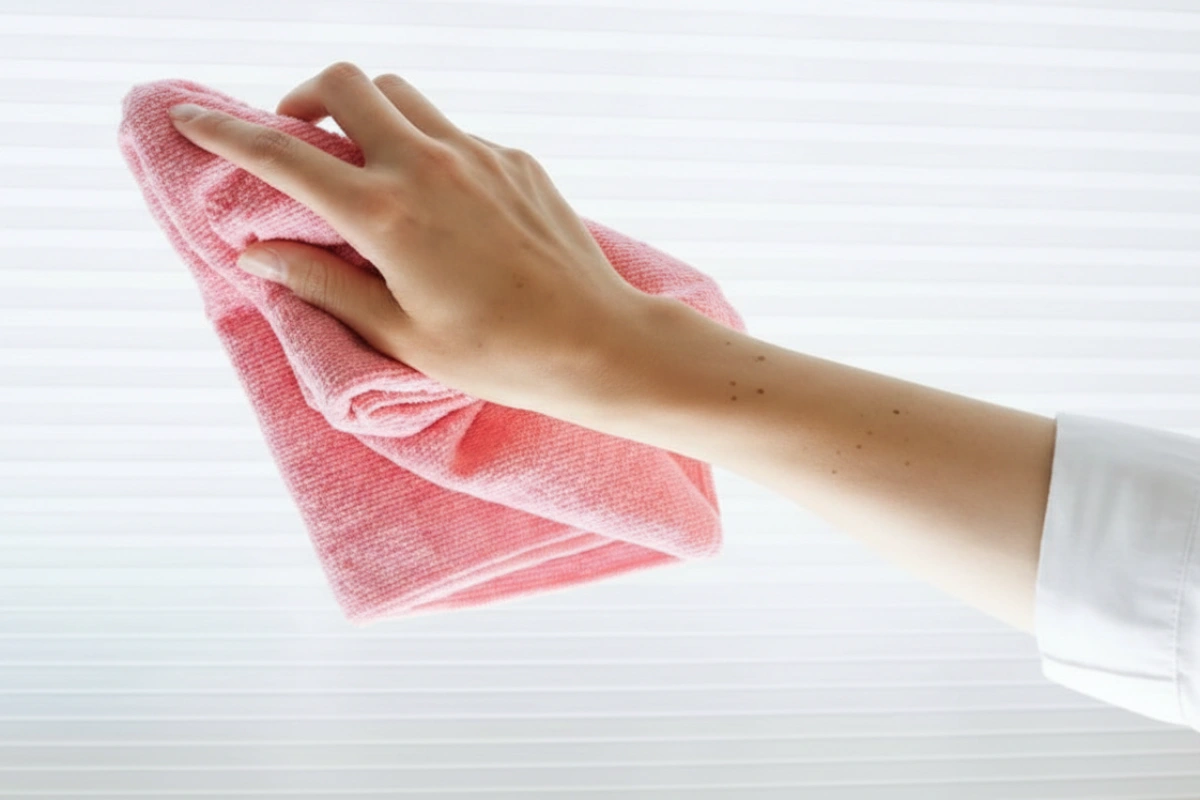
The most important step in cleaning the blinds is dusting them to ensure a neat, clean, and allergen-free surface. Close blinds fully by pulling the lower head rail. For dust removal, use a vacuum with a brush attachment or a microfiber cloth.
Set the vacuum on the low suction setting to avoid fabric damage. For easy removal of loose dust and debris, start dusting from the top of the window shade, then move to the bottom. This way, you will reduce the resettling of dust on the upper cleaned portion of the window blinds.
If you don’t have a vacuum, then wipe the entire blind with the dry microfiber cloth. When the upper side is free of dust, reverse the blinds and repeat the dusting process.
If there are spots or minor stains on the blinds, then spot cleaning is the most effective method. Prepare the cleaning solution by mixing mild detergent with warm water. Dip a microfiber cloth into this mild solution, then wring it out to remove excess water. Then gently dab the area with the visible stain, working from the outside to the inside of the stain. This will reduce the chance of stain spreading to the other parts of the shades.
Avoid rubbing the fabric, because it can damage the fabric structure and enhance the deep setting of stains. Once the spot is wiped out, repeat the process by clean cloth to remove the settled stains. At the end, blot dry the wet area with a towel and air dry completely before use. Air drying will protect the fabric shades from creasing and mould growth.
For deep cleaning, it is advisable to hire experts for professional cleaning. For those who want to learn the process of how to deep clean the fabric window shades, follow the steps below.
If your window blinds are made of synthetic fabric materials and are heavy-duty, such as PVC and vinyl blends, steam cleaning is an appropriate method. These will not warp or shrink when you keep the steamer at a low heat setting and a proper distance from the fabric.
If your fabric shades are manufactured from delicate, natural fabric or lined, then avoid cleaning these shades with a steamer. It can cause damage to the fibres, warp the blinds, or scorch the surface. The adhesive will be melted due to the heat, thereby ruining the structure and the headrail mechanisms, too. For safe cleaning, check the small hidden part of the fabric with a steamer. This will help to ensure the effectiveness of steaming, no discolouration, and structural damage.

Not all fabric blinds are made of similar materials. Their makeover is also different. So, they need different cleaning approaches depending on their material, construction method, and use. Some materials require more careful care, while other heavy-duty options may require less care to maintain their look. Have a look at the following description to get you to understand the best cleaning technique for your window blinds.

To deep clean fabric blinds, you need to understand the different types of stains to treat them with the suitable approach.
To remove grease stains from fabric blinds, make a paste of baking soda and water. Apply it to the stains, then wait 20-30 minutes. Then rinse the area with clean water and dry it. For the removal of mould and mildew, spray the solutions of vinegar and water on the dirty surface of fabric blinds. After 15 minutes, wipe the surface. You can use this solution for removing pet stains from your fabric shades.
To remove the smoke odour from the fabric, sprinkle the baking soda and let it absorb the odour overnight. Then, clean the fabric using a vacuum. If the odour is still present, then you can use the DIY vinegar solution (equal parts of water and vinegar).
If the DIY methods fail to clean the fabric effectively, then you must seek professional cleaning services. For delicate fabrics like silk curtains, heavily soiled blinds, deep-settled smoke, or tough mould stains. Save time by booking a trusted cleaning service.
If you want to get the functional and aesthetic benefits of fabric blinds for longer, follow the expert tips for better maintenance.
To clean fabric-based blinds safely, dust them regularly with a vacuum equipped with a brush head or a soft cloth. Wipe off the spots with a damp cloth. For deep cleaning, see the manufacturer’s instructions and then treat them according to their recommended cleaning methods. If you have tried all the methods described in this guide but the stains remain, you must consult a professional. Always follow the safe cleaning methods to keep your fabric blinds fresh, bright, and long-lasting.