Best Smart Blinds Compatible with Alexa & Google Home in UAE
The demand for smart home automation in the UAE is rising for energy efficiency, security, and a luxurious lifestyle. Smart blinds add comfort, convenience, and a stylish look to your…

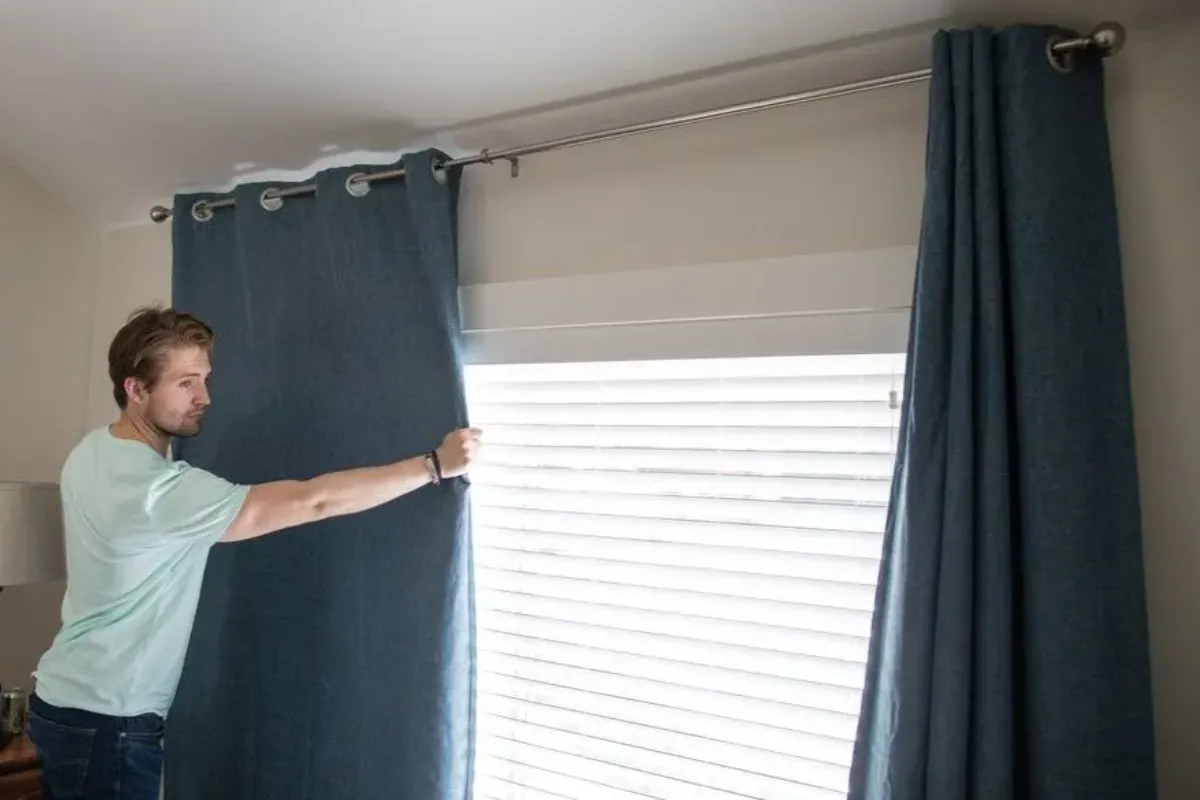
Blackout curtains help block sunlight, reduce outside noise, and add a touch of elegance to any space. Many people also use blinds to achieve the same function. However, for the best results, experts recommend installing blackout curtains over blinds. By layering blackout drapes over vertical blinds, you can achieve superior light control, enhanced insulation or privacy, and a more sophisticated aesthetic.
Window blinds are excellent at filtering light and offering daytime privacy. However, they often allow light to leak in through the slats and around the edges of the window frame. By adding a layer of blackout curtains, you can effectively eliminate these light gaps, allowing for total darkness and privacy. The extra fabric layer from the curtains creates an insulating air pocket that helps regulate the room’s temperature. In this guide, you will explore everything you need to know about installing blackout curtains over blinds.

Yes, you can. Installing blackout curtains over blinds is a practical choice for many homeowners. It allows you to maximise both the visual appeal and the performance of your window treatment. Blinds offer a clean, structured look, while curtains add softness, texture, colour, and depth to a room. The combination of two layers provides maximum privacy. Blinds can be adjusted for daytime privacy, while the curtains offer complete darkness at night.
Not all blinds work equally well under curtains. Roller blinds, vertical blinds, Venetian blinds, and cellular shades are ideal choices. They provide a smooth base for curtains to hang evenly and do not interfere with the curtain rod.
This setup is especially useful for rooms that need darkness during the day, like bedrooms or nurseries. It is very beneficial for shift workers, people sensitive to light, or young children who nap during the day. The layered combination also provides total control over ambient light in media rooms and home theatres.

Before beginning the installation, collect all necessary equipment. These are the tools and materials that you must have for a smooth and hassle-free process.

Accurate measurement is essential for the proper fitting of blackout curtains over blinds. A slight error in the length and width of your curtains will affect their overall look and performance. So this step is very important to achieve your desired outcomes.
To achieve the complete light blockage, the width of your blackout drapes should extend beyond the window frame. This allows your curtains to cover the gaps where light might peek through around the edges of the blinds.
Measure the full width of your window, including any trim or casing. For complete coverage, the curtain rod should extend 4 to 6 inches on each side of the window frame. This ensures the curtains overlap the wall sufficiently when drawn closed.
When choosing blackout window drapes, the total curtain width should be two or three times the rod width to allow for fullness when hung.
Accurate measurement of height determines where you mount the rod and the final length of your curtains. Mount the curtain rod at least 4 to 6 inches above the top of the window frame or close to the ceiling. This will create an illusion of a taller window and prevent light from entering over the top of the blinds.
Now, determine the length of curtains and the look you want in your space. Floor-length curtains that reach the floor offer the best light blocking. They create a formal and elegant look. For floor-length blackout curtains, measure from the rods’ intended height down to the floor. You can choose the length that breaks slightly on the floor or just hovers a half inch above the floor.
However, you can choose sill-length curtains if your windows are above a counter, radiator, or desk. For sill-length blackout drapes, measure from the rod to the window sill, subtracting about half an inch for a clean look.

To install blackout curtains over the blinds, choose a rod with 3 to 4 inches of projection. The ideal rods for this purpose are wraparound rods that curve the wall for maximum light seal. Mount it 4 to 6 inches high above the window and 3 to 6 inches wider on each side of the window frame.
Blackout curtains are heavy. Always use wall anchors if not mounting into the studs. Ensure brackets and anchors are sturdy and rated for the weight of your heavy blackout drapes. For rods over 4 feet, add a centre bracket for stability.

Install your blackout curtains over blinds perfectly, following these simple steps.
Proper placement of the curtain rod is key to optimal light blockage. Place your curtain rod at the desired height above the window frame. Use a pencil and lightly mark the wall where the top of each bracket will sit. Ensure the marks on both sides of the window frame are level.
Align the brackets with your pencil marks. If the brackets come with anchors, use them; plan to use wall anchors appropriate for your wall type. This is important for added stability. Pre-drill holes if necessary.
Insert the chosen anchors, then screw the brackets securely into the wall using a drill or a screwdriver. If your window is oversized, and you are using a long rod or heavy curtains, then install a centre support bracket for extra stability to prevent sagging.
Once the brackets are installed, you can hang the rod. Ensure the finials are attached to the rod ends. Carefully place the rod into the installed brackets. If using a centre support, guide the rod through it. Gently move the rod to ensure it feels secure and balanced in the brackets.
The final step is to hang your blackout window curtains. If you are using rings and clips on the rod, then slide the curtains onto the rod before placing it on the bracket. Make sure the curtains are facing the correct direction and arranged with an even number of panels on each side of the window.
Once hanging, slide the curtains closed to ensure the overlap in the middle, extend them past the window frame horizontally, and cover it from top to bottom. Adjust the panels’ placement so they hang evenly. The bottom of the curtains should touch or kiss the floor for the best blackout effect and aesthetic appeal.

These are some valuable tips to get maximum light blockage when installing blackout drapes over blinds:
There are many mistakes people often make when installing blackout curtains over blinds. These mistakes can destroy the effectiveness of your drapes, or they can look messy. So install your curtains carefully and avoid these mistakes:
Installing blackout curtains over existing blinds is an effective way to maximise light blockage and improve insulation. You can use this layering technique to improve sleep quality in the bedroom and nursery. Moreover, this setup is effective in media rooms, home theatres, home offices, and street-facing living rooms. In this guide, we provide an easy method for installing blackout curtains over blinds. This technique helps you to upgrade both the style and functionality of your interiors.